What's New
About this database
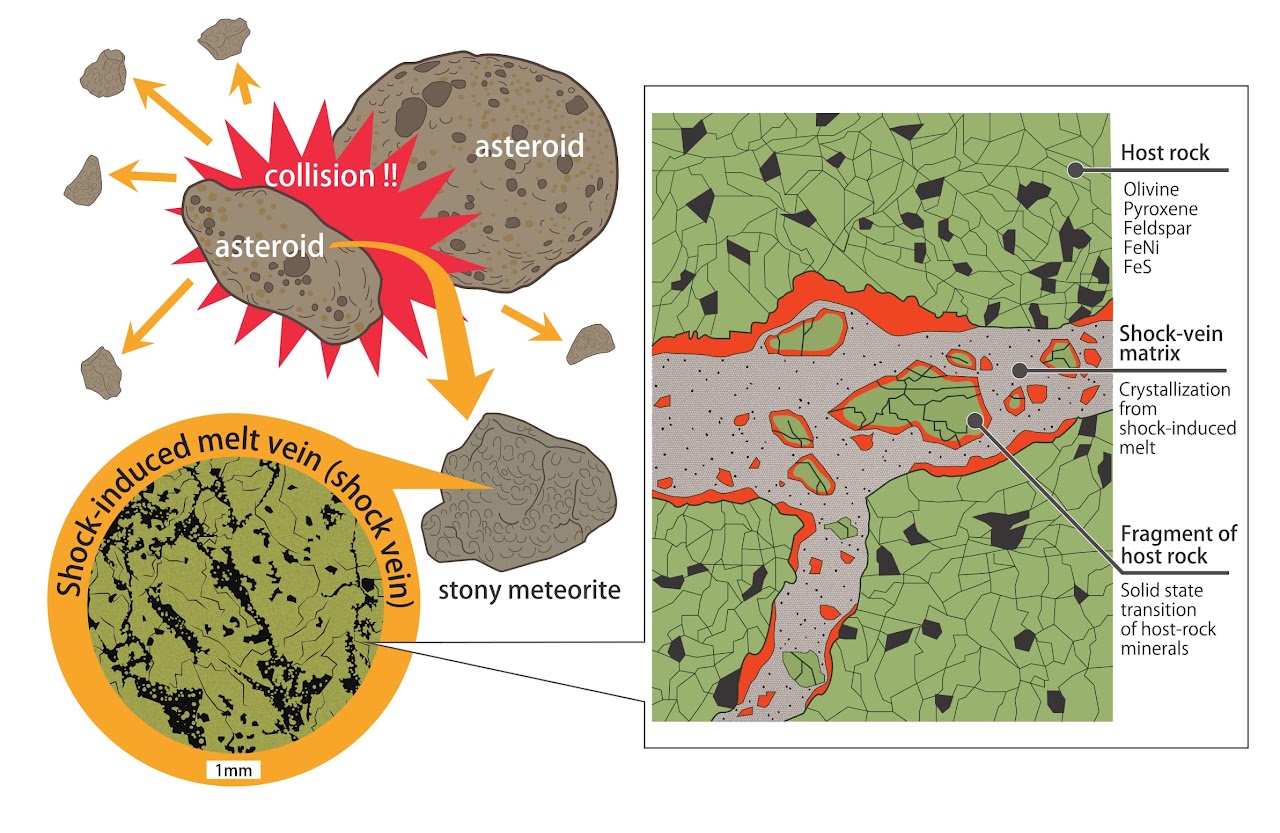
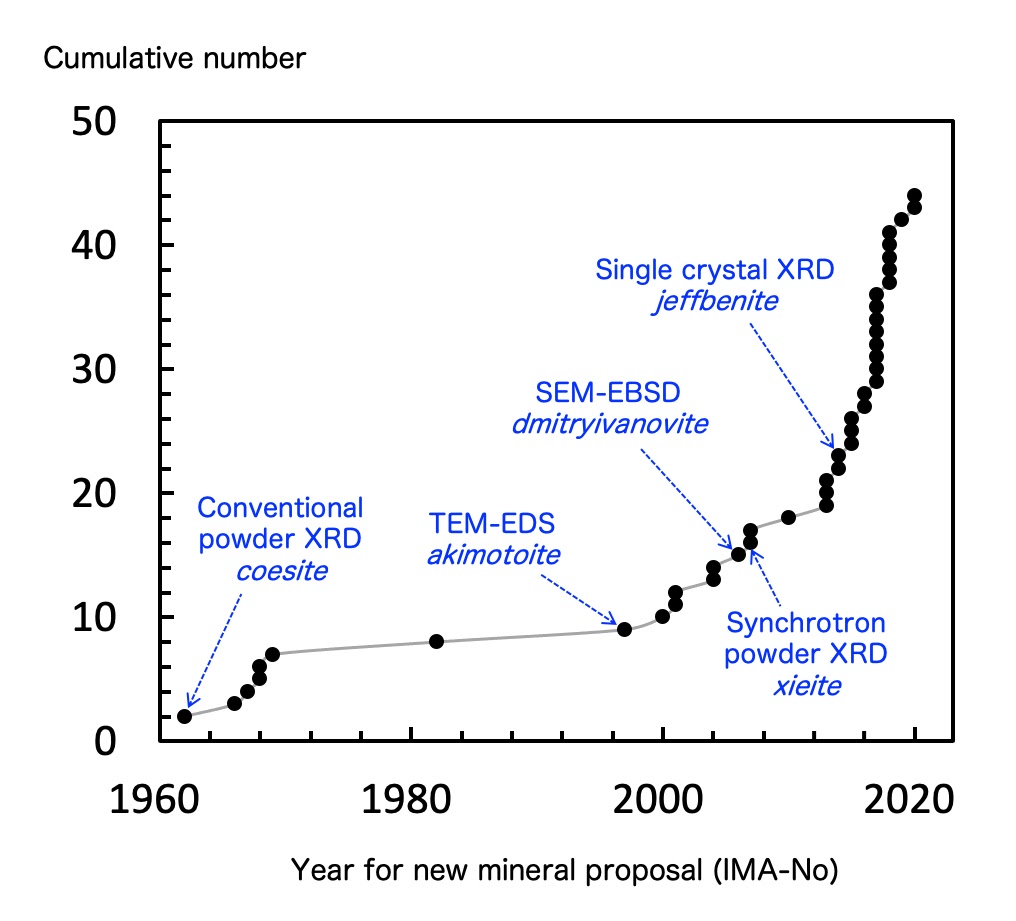
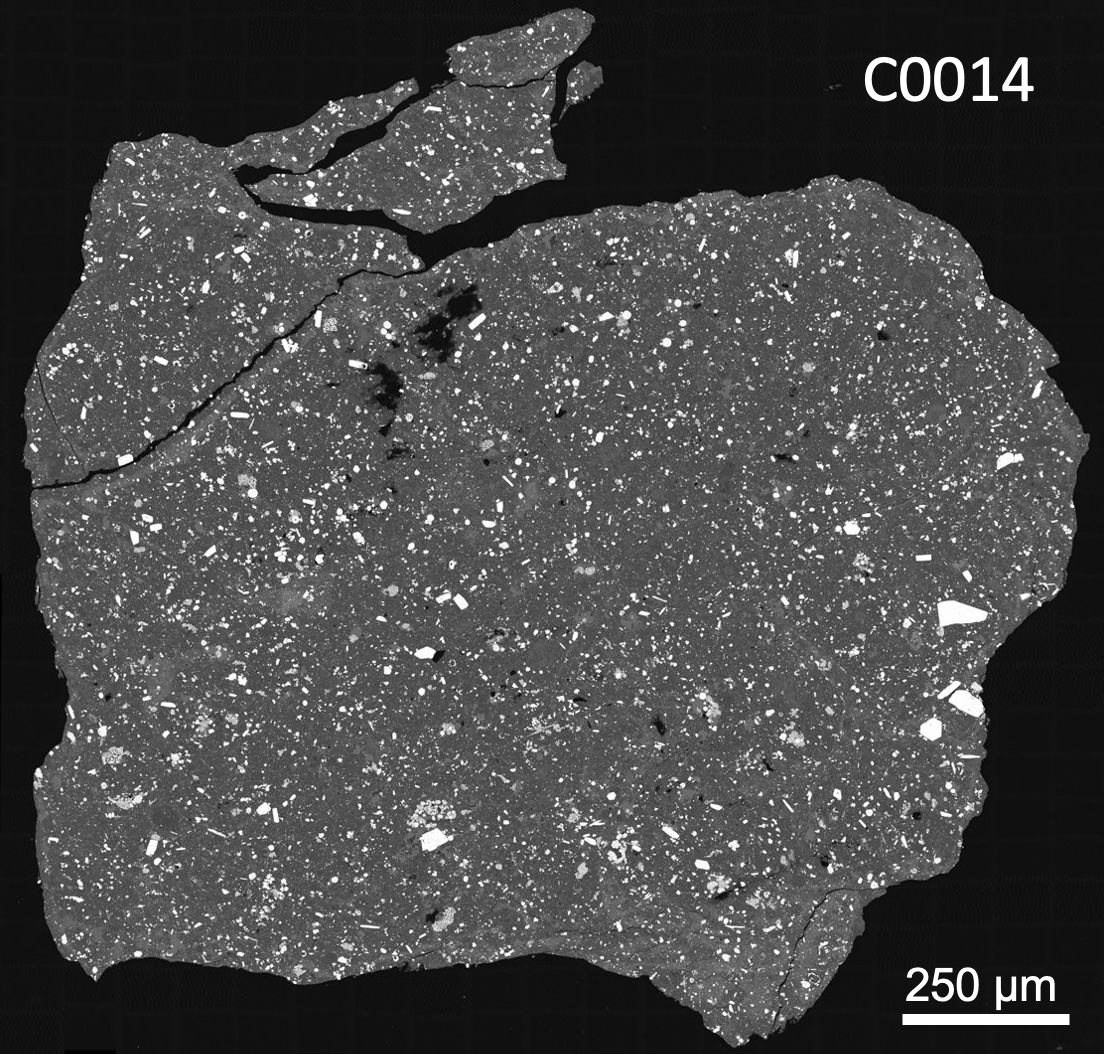
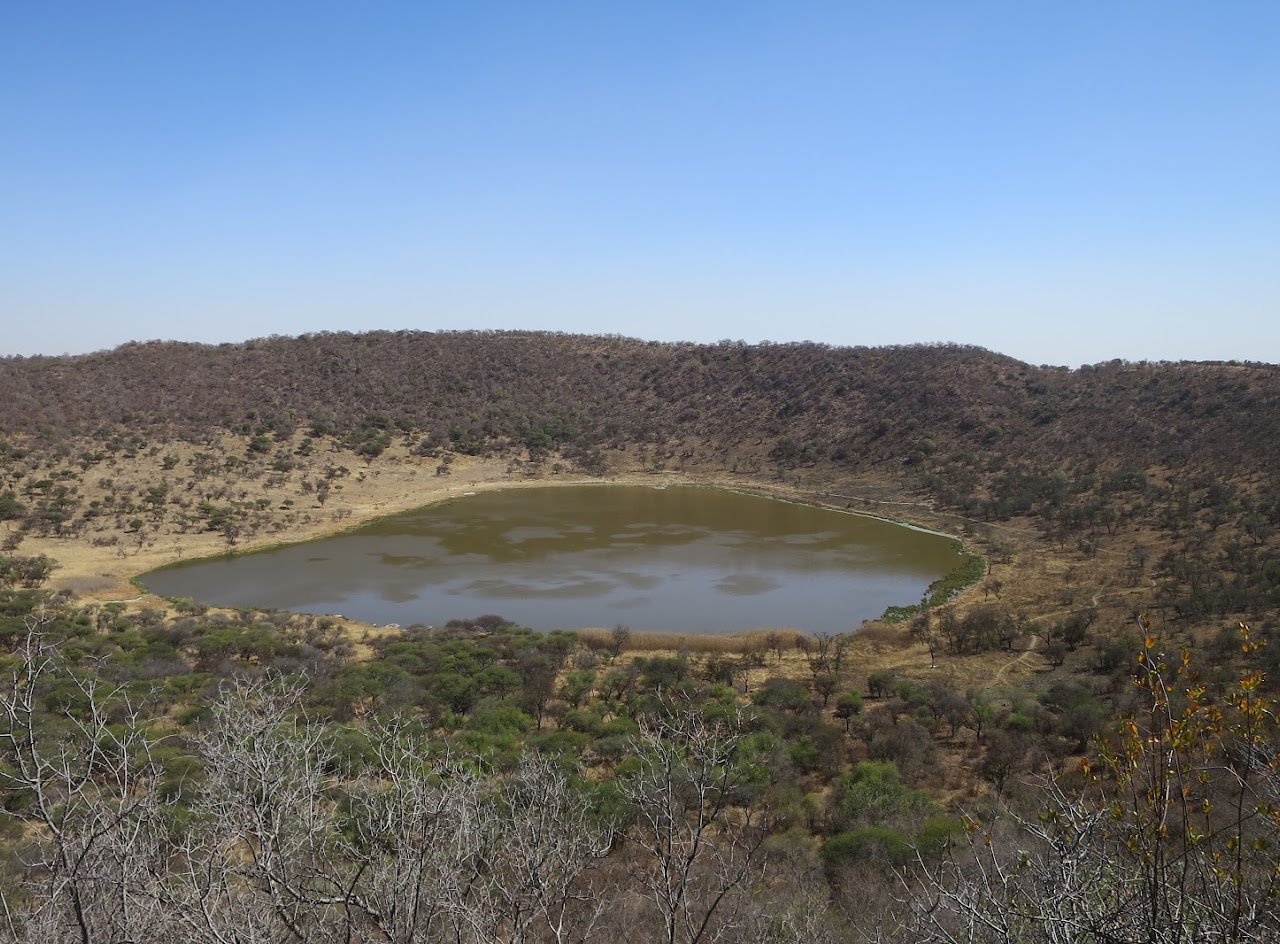
A variety of dense polymorphs of elements, oxides, and silicates have been synthesized in laboratory high-pressure experiments. In nature, shocked meteorites are the most important source of high-pressure minerals, along with impact crater rocks, inclusions in diamond, mantle xenoliths, and ultrahigh-pressure (UHP) metamorphic rocks. These high-pressure minerals are difficult to characterize fully because of their very small grain size and low abundance. State-of-the-art techniques such as electron microscopy, synchrotron X-ray diffractometry, and micro-Raman spectroscopy, however, now enable the identification of such minute crystalline grains. As a result, many natural high-pressure phases of silicates and oxides have been discovered since the 1990s. The textural, crystallographic, and chemical characteristics of meteoritic high-pressure minerals provide not only clues to the impact events experienced by meteorite parent bodies but also insights into the structure and dynamics of the deep Earth. This website provides a database of high-pressure minerals in both meteorites and terrestrial rocks.
General references — Shocked meteorites 7 papers
- Gillet P. and El Goresy A. 2013. Shock events in the solar system: the message from minerals in terrestrial planets and asteroids. Annual Review of Earth and Planetary Sciences 41:257–285.
- Rubin A. E. and Ma C. 2017. Meteoritic minerals and their origins. Chemie der Erde - Geochemistry 77:325–385.
- Tomioka N. and Miyahara M. 2017. High-pressure minerals in shocked meteorites. Meteoritics & Planetary Science 52:2017–2039.
- Tschauner, O. 2019. High-pressure minerals. American Mineralogist 104:1701–1731.
- Miyahara M., Yamaguchi A., Saitoh M., Fukimoto K., Sakai T., Ohfuji H., Tomioka N., Kodama Y., and Ohtani E. 2021. Systematic investigations of high-pressure polymorphs in shocked ordinary chondrites. Meteoritics & Planetary Science 55:2619–2651.
- Morrison S. M., and Hazen R. M. 2021. An evolutionary system of mineralogy, Part IV: Planetesimal differentiation and impact mineralization (4566 to 4560 Ma). American Mineralogist 106:730–761.
- Miyahara M., Tomioka N., and Bindi L. (2021) Natural and experimental high-pressure, shock-produced terrestrial and extraterrestrial materials. Progress in Earth and Planetary Science 8, 59.
General references — Impact craters 1 book
General references — Inclusions in diamonds 1 paper
General references — Ultrahigh-pressure metamorphic rocks 2 papers
- Liou J. G., Ernst W. G., Zhang R. Y., Tsujimori T., and Jahn B. M. 2009. Ultrahigh-pressure minerals and metamorphic terranes–the view from China. Journal of Asian Earth Sciences 35:199–231.
- Liou J. G., Tsujimori T., Yang J., Zhang R. Y., and Ernst, W. G. 2014. Recycling of crustal materials through study of ultrahigh-pressure minerals in collisional orogens, ophiolites, and mantle xenoliths: A review. Journal of Asian Earth Sciences 96:386-420.
Natural high-pressure minerals
Including potential high-pressure minerals.
Silicate minerals
Under the microscope
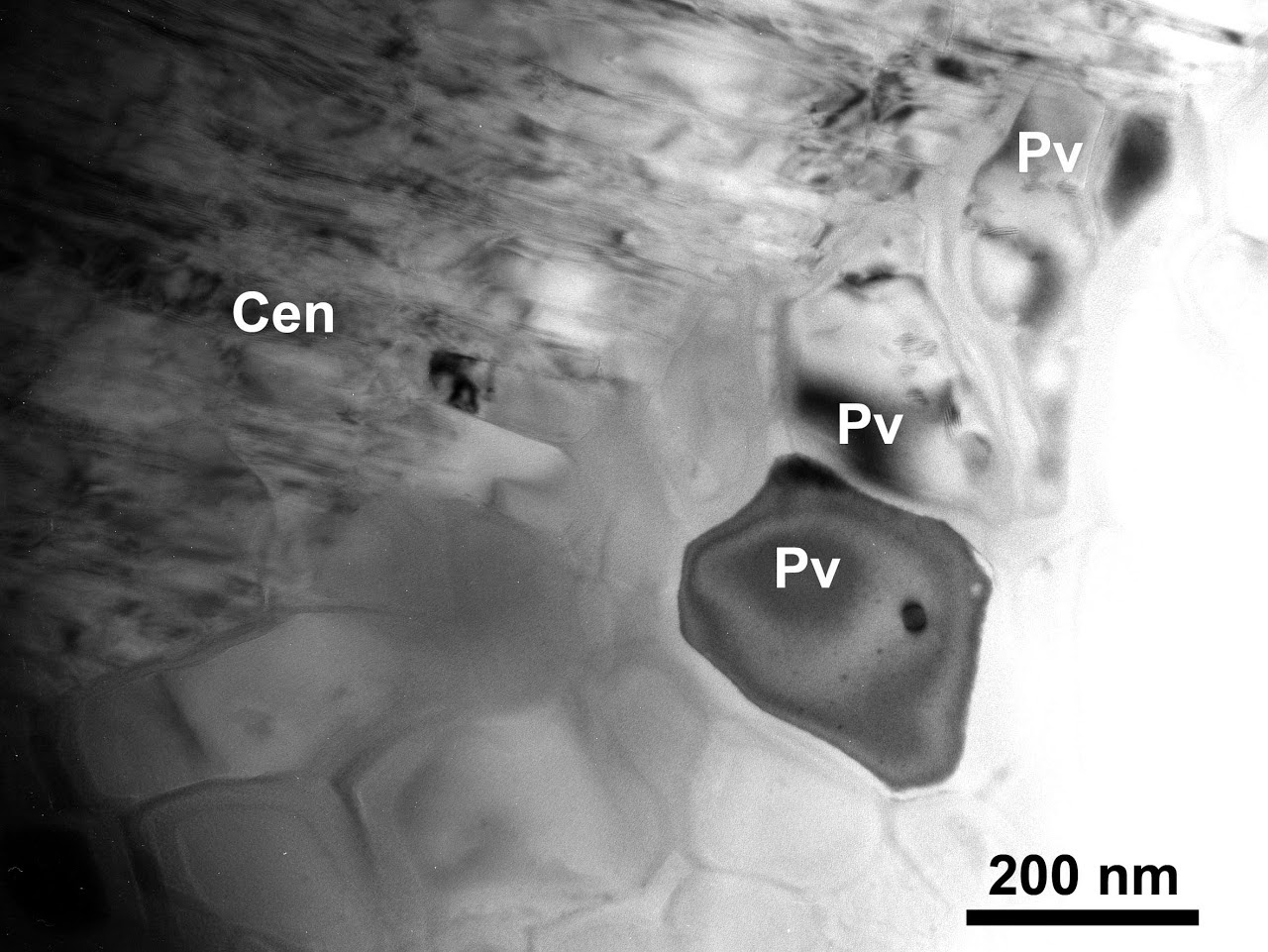
Bridgmanite (Pv) grains in a shocked meteorite (TEM image)
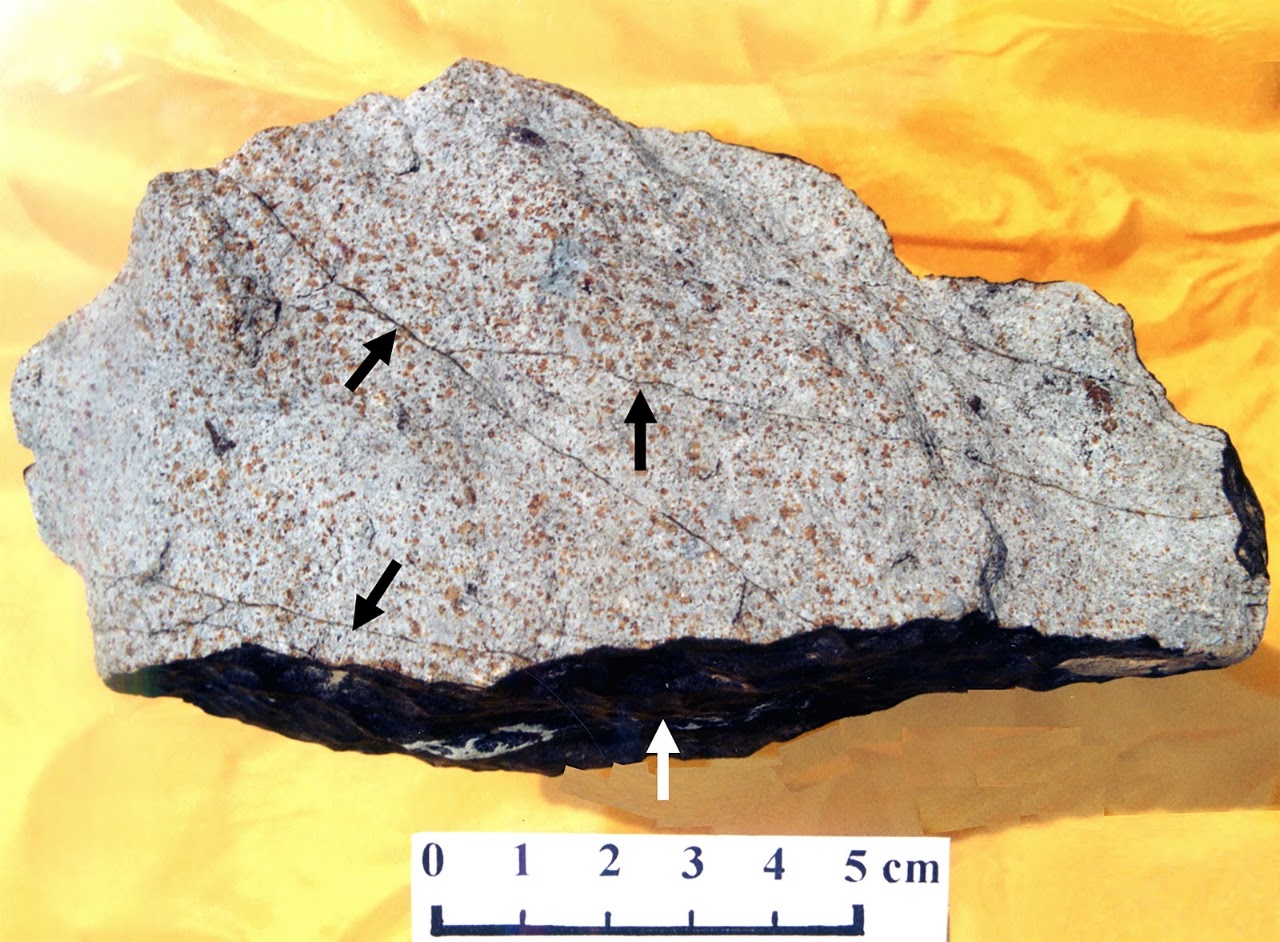
Host rocks of high-pressure minerals
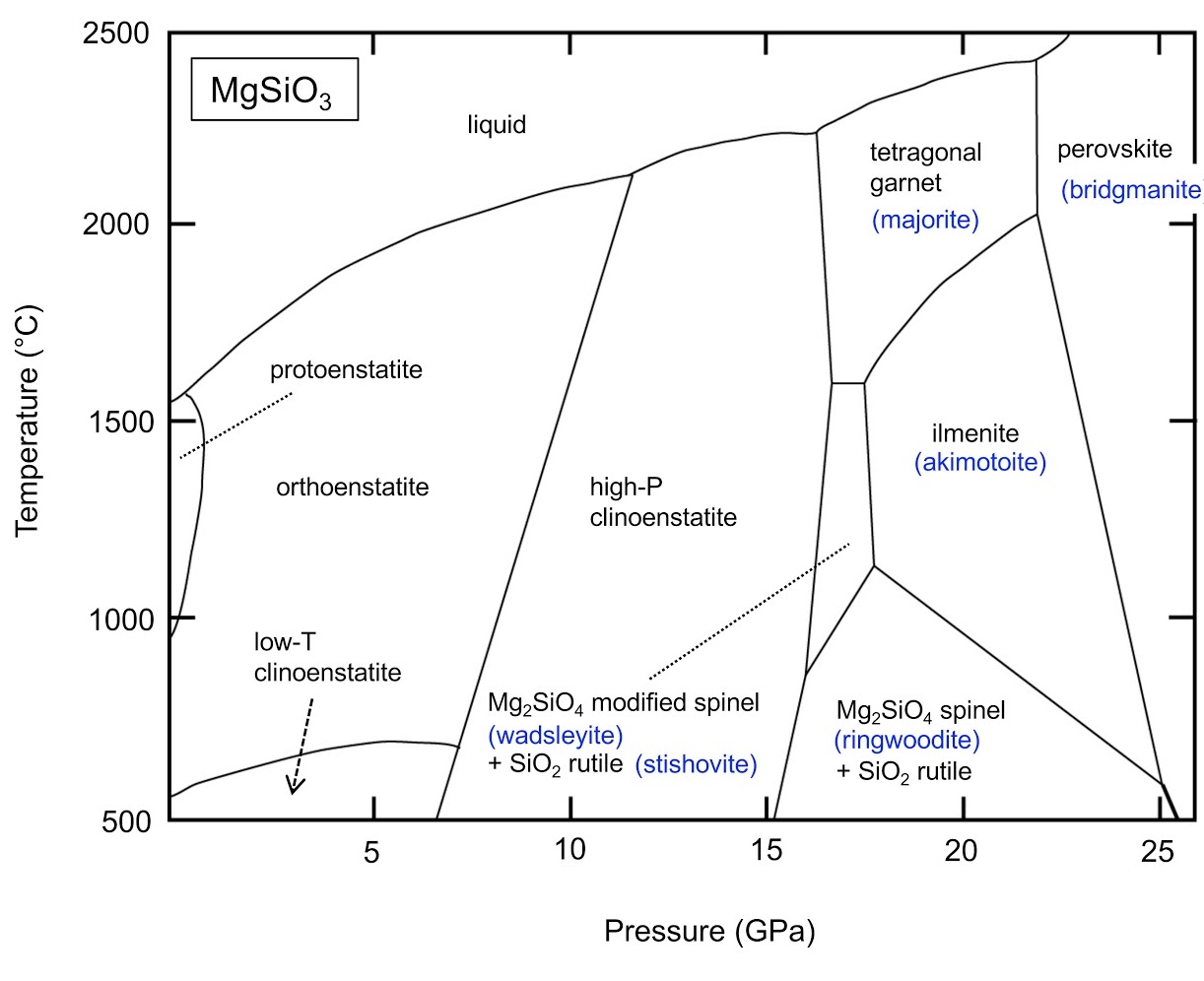
Phase diagrams in high-pressure mineralogy
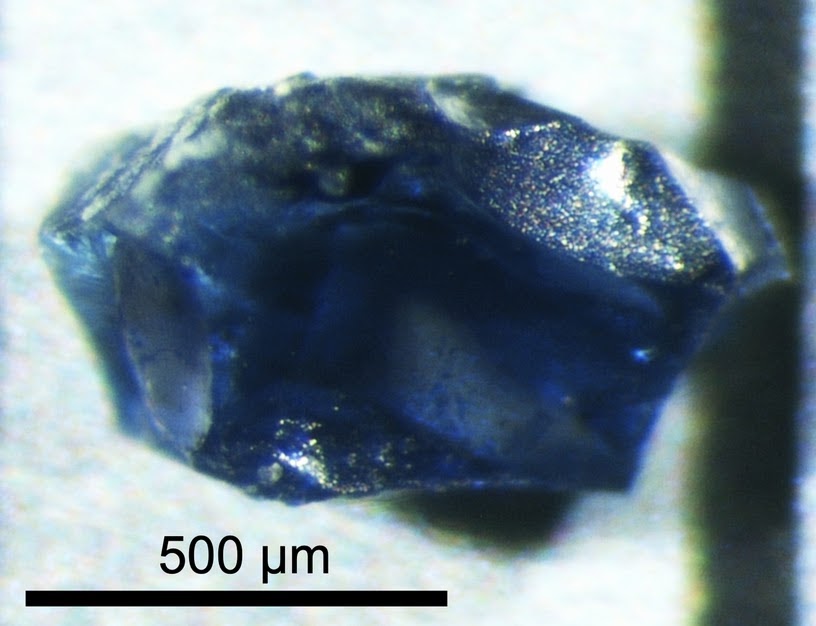
Links
Acknowledgements
This database was supported by JSPS KAKENHI Grant Numbers 15H03750, 23540558 and contributions from the following people:
- Makoto Kimura, National Institute of Polar Research, Japan
- Chi Ma, California Institute of Technology, USA
- Andrew Putnis, University of Münster, Germany
- Zhidong Xie, Nanjing University, China
- Luca Bindi, Università di Firenze, Italy
- Miho Sasaoka, Kochi University, Japan
- Masaki Akaogi, Gakushuin University, Japan
- Richard Wirth, GeoForschungsZentrum Potsdam, Germany
- Narangoo Purevjav, University of Bayreuth, Germany